

Ant problems in Southeast Texas rarely follow a neat seasonal schedule. While activity often becomes more obvious during warmer months, the conditions that support ants can remain present throughout the year. Heat, humidity, rainfall, irrigated lawns, shaded landscaping, and mild winters allow colonies to keep searching for food, moisture, and shelter even when outdoor activity slows.
This is why ant control should not be viewed as a one-time response to a visible trail. Ants are organized, persistent, and highly adaptable. When a kitchen counter, bathroom sink, pantry shelf, patio, or garage provides steady resources, colonies may continue testing new routes until the source is addressed. In many homes, the ants people see indoors are only the workers. The nest, moisture source, or entry point may be hidden outside, under the slab, along the foundation, or inside structural gaps.
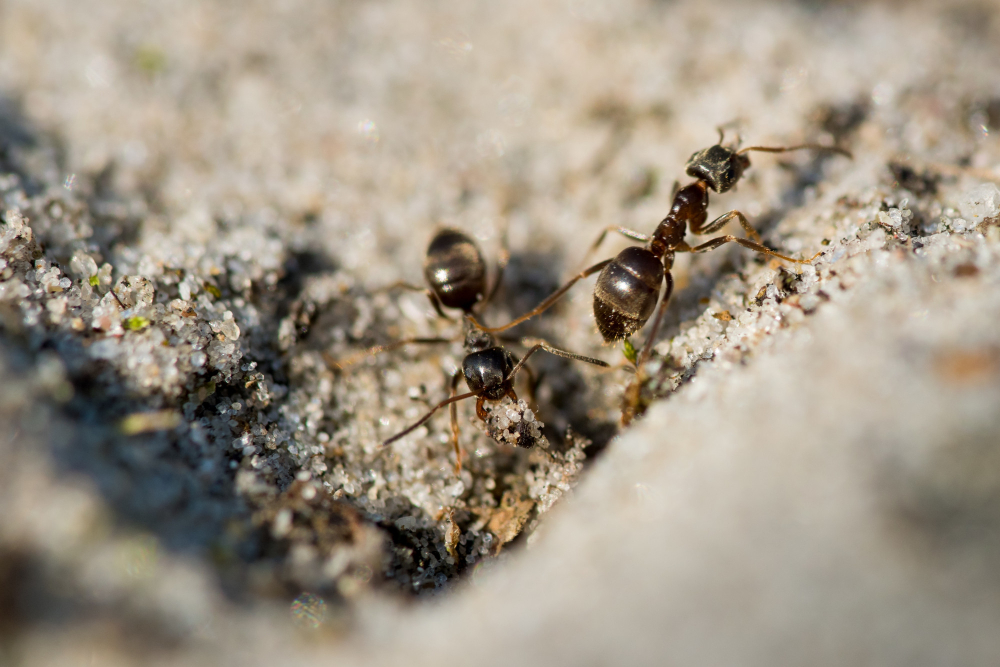
Southeast Texas Weather Keeps Ants Active
The local climate gives ants more opportunities to survive, forage, and rebuild. Warm temperatures extend activity periods, while humidity and rain create soft soil and damp areas where colonies can thrive. Even during cooler stretches, protected spots near foundations, walls, and plumbing lines can keep ants close to the structure.
- Heat increases foraging, which can make trails appear quickly around kitchens and bathrooms.
- Rain can flood outdoor nesting areas and push ants toward drier indoor spaces.
- Humidity supports moisture-loving conditions near sinks, drains, crawl spaces, and wall voids.
- Irrigation can keep landscaping damp enough to support colony activity near the home.
- Mild winters may slow ants down, but they do not always eliminate pressure.
These conditions explain why ants may seem to disappear, then return days or weeks later. The colony may still be active nearby, simply adjusting its routes as weather, moisture, and food access change.
Indoor Food And Moisture Keep Trails Returning
A home does not need to be dirty to attract ants. Small amounts of food residue, water, and shelter can be enough to keep trails active. In Southeast Texas homes, kitchens, bathrooms, laundry rooms, pantries, pet-feeding areas, and garage storage zones often provide what ants need.
- Crumbs, grease, syrup, fruit, and pet food can attract foraging ants.
- Leaky pipes, damp cabinets, and condensation can create reliable water sources.
- Trash bins, recycling containers, and outdoor grills can support nearby activity.
- Pantry gaps and poorly sealed containers can keep ants returning to the same area.
- Wall gaps, door thresholds, and window frames can become repeat entry routes.
Ant trails can become more visible in spring because colonies expand as temperatures rise and moisture increases. However, the same factors can continue after spring if the home still offers food, water, or access. For a closer look at why surface-level efforts fail, this guide on spring ant activity explains why colonies are difficult to manage without addressing the source.
Hidden Entry Points Make Ant Problems Harder To Stop
Ants can enter through openings that are easy to overlook. A small crack near a slab, a loose seal around a window, a gap under a door, or an opening around plumbing may be enough for steady movement. Once ants establish a successful path, they may keep using it until the route is disrupted and the colony pressure is addressed.
- Foundation cracks can give ants protected access from soil to interior spaces.
- Utility penetrations may create hidden routes behind cabinets, appliances, or walls.
- Door sweeps and weatherstripping can wear down enough to leave small gaps.
- Landscaping that touches the home can attract ants toward siding, windows, and rooflines.
- Moist mulch and soil near the structure can keep colonies close to entry points.
This is where professional inspection becomes valuable. A careful review can connect visible ants to exterior pressure, moisture conditions, entry points, and nesting areas. It also helps identify whether other pests, such as spiders or rodents, are benefiting from the same gaps or conditions.
Long-Term Control Depends On A Complete Plan
Persistent ant problems usually need more than a quick treatment where ants were seen. A stronger plan begins with inspection, identification, targeted treatment, prevention guidance, and follow-up. That process matters because different ant patterns require different responses. Some colonies may be outdoors and entering for food. Others may be taking advantage of moisture-heavy areas or structural gaps.
Professional ant control also reduces the guesswork that often leads to repeated frustration. Treating only visible workers can leave the colony active. Overusing the wrong product can scatter ants into new areas. Missing moisture and entry points can allow trails to return after the first improvement.
Texas homeowners often miss hidden routes, nesting conditions, and the way pests respond to surface treatments. This article on treating pests explains why a broader view of the property is important. Long-term results depend on understanding how pests move, not just where they appear.
Keep Ants From Reclaiming Your Home
Year-round ant pressure in Southeast Texas is driven by weather, moisture, food access, and hidden entry points. For inspections, targeted treatment, and ant control, contact Fisher’s Pest Control for professional services.


