

Many people assume ant problems disappear once temperatures drop. In reality, winter changes where ants operate rather than stopping activity altogether. While outdoor movement slows, ant colonies adapt by shifting deeper into protected indoor environments where warmth, moisture, and food remain available. This hidden behavior is why ant control continues to play an important role even during colder months.
Ant colonies are resilient and highly organized. Seasonal changes influence nesting locations, travel routes, and foraging behavior. Homes provide stable conditions that allow colonies to survive winter quietly, often without obvious surface activity. Understanding how ants behave during winter explains why waiting until spring can allow small issues to become larger, more complex infestations.
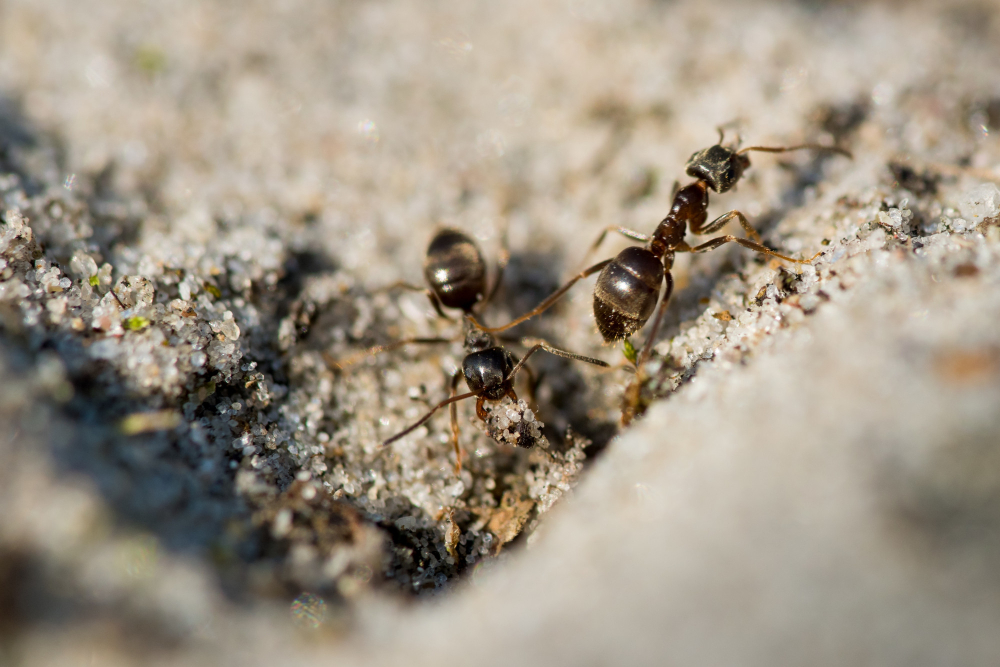
How ants adapt to winter conditions indoors
Cold weather forces ants to adjust their survival strategies. Rather than remaining exposed outdoors, colonies relocate to areas that provide insulation and protection from temperature extremes.
- Colonies move into wall voids, foundations, and subfloor spaces
- Activity slows but does not stop entirely
- Heat from plumbing, appliances, and structural materials creates favorable zones
- Moisture from condensation supports colony survival
During winter, ant activity often becomes concentrated rather than widespread. This makes sightings less frequent but more meaningful. A few ants appearing near sinks, pantries, or baseboards may signal a nearby nesting site rather than random movement.
Ant control during winter focuses on understanding these indoor shifts. Addressing activity while colonies are contained helps prevent expansion once conditions become more favorable.
Why winter ant activity often goes unnoticed
One of the challenges with winter ant infestations is visibility. Reduced outdoor activity creates the impression that pest pressure has declined, even though indoor conditions may still support colonies.
- Ants travel through concealed structural pathways
- Nesting zones remain hidden behind walls or beneath flooring
- Reduced human traffic in storage areas limits disturbance
- Lower activity levels make signs easier to miss
Because ants operate quietly in winter, infestations may persist without obvious indicators. Trails may appear briefly and disappear, leading to the assumption that the issue resolved itself. In reality, colonies often remain intact and ready to expand when temperatures rise.
Professional ant control addresses this challenge by identifying nesting areas and movement patterns that are not visible during casual observation.
How winter conditions prepare ants for spring expansion
Winter is not a dormant period for ants. It is a preparation phase. Colonies use this time to stabilize, protect queens, and maintain survival until outdoor conditions improve.
- Nesting zones remain insulated and undisturbed
- Food sources stay consistent indoors
- Colony structure remains intact
- Population growth resumes quickly in warmer weather
When spring arrives, established colonies are positioned to expand rapidly. This is why ant problems often appear suddenly after winter even though activity began months earlier. Managing ant control during winter reduces this buildup and limits the scale of future infestations.
Seasonal behavior patterns explain why professional evaluation during colder months can be more effective than waiting until peak activity returns. Insights into how cold weather influences pest behavior are outlined in this discussion on cold weather pest changes, which helps clarify why winter remains an active period for many pests.
The risks of ignoring ant control in winter
Delaying ant control until visible problems appear often leads to more involved solutions later. Winter infestations that remain unaddressed allow colonies to strengthen and spread within structures.
- Increased nesting zones inside walls and floors
- Greater risk of repeated infestations year after year
- Harder to pinpoint original access points
- Expanded activity across multiple rooms
Some homeowners attempt to manage winter ant sightings on their own, assuming limited activity means limited risk. However, incomplete or surface-level approaches often fail to address nesting sites and long-term contributors. The limitations of at-home methods are explained further in guidance on DIY pest risks, which highlights why professional strategies are more effective for persistent issues.
Ant control in winter is not about immediate elimination alone. It is about preventing colonies from becoming entrenched in protected areas that are difficult to access later.
Why professional ant control matters year-round
Effective ant control requires an understanding of seasonal behavior, colony structure, and environmental factors that support activity. Winter conditions create unique challenges that benefit from professional evaluation.
- Identification of hidden nesting zones
- Understanding of seasonal movement patterns
- Targeted treatment based on real activity
- Reduced risk of repeat infestations
Professional ant control focuses on both current activity and future prevention. By addressing ants during winter, it becomes possible to disrupt colonies while they are concentrated and less likely to spread.
Ant infestations rarely resolve on their own. Seasonal changes simply alter how activity presents itself. Addressing ant control consistently throughout the year leads to better outcomes and fewer surprises as conditions change.
Winter provides a valuable window for assessment and correction. When colonies are less active on the surface, it becomes easier to focus on underlying causes rather than chasing visible ants from room to room.
Stop ants before spring arrives
We understand how winter conditions affect ant behavior and why ant control remains essential even during colder months. For effective prevention and professional guidance, contact Fisher’s Pest Control so we can help protect your home throughout every season.


